
Opinion piece: A moment of truth for ocean protection: adding efficiency to coverage
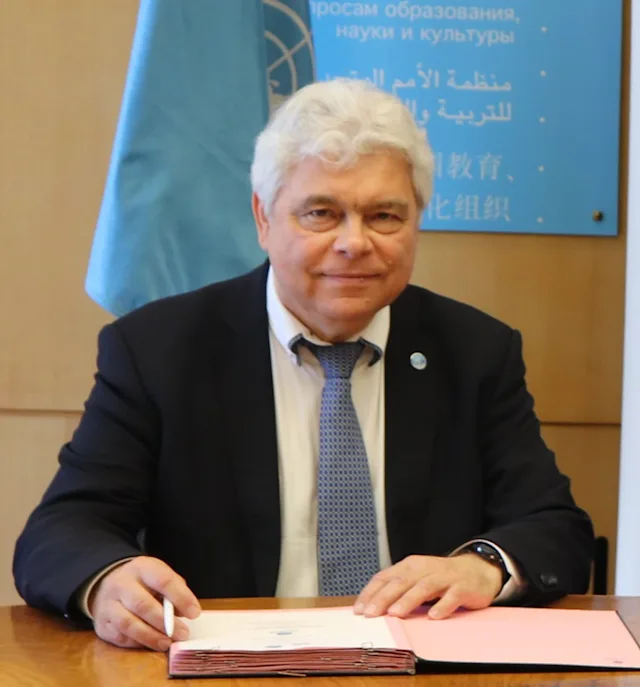
Vladimir Ryabinin, international consultant to the Scripps Institution of Oceanography and immediate past (2015-2024) executive secretary of the Intergovernmental Oceanographic Commission (IOC) of UNESCO
Dr. Ryabinin is an oceanographer, climatologist, meteorologist and marine engineer, a laureate of the Marine Technology Society’s Compass Award for significant impact on the fields of marine science and technology. His early scientific achievements included a contribution to the start of weekly numerical weather prediction in the Soviet Union in the 1980s and demonstrating the feasibility of polar underwater gas pipelines in the 1990s. Dr. Ryabinin’s service to the United Nations was focused on marine meteorology, ocean observations and climate research, culminating with the concept and launch of the UN Decade of Ocean Science for Sustainable Development (2021-30).
By the end of the 2010s, seven UN programmes and four global environmental non-governmental organisations (NGOs) were actively establishing various types of marine protected areas (MPAs).1 The pace quickened in the early 2020s, gaining wider recognition. Today, the most prominent push comes from the Kunming-Montreal Global Biodiversity Framework (GBF) under the UN Convention of Biological Diversity. Target 3 of the GBF calls for protecting or sustainably managing at least 30% of the planet’s area, including the ocean, by 2030.
Progress is measurable but uneven. The Protected Planet Report notes that 8.4% of the ocean was under protection in 2024.2 Yet, restrictions on human activity in many MPAs remain weak. In 2022, for instance, MPAs covered 11.4% of EU waters, but only 0.2% were fully or highly protected.3
Global marine protection efforts are bolstered by regional activities, particularly in fisheries, through some 20 ocean-basin or species-based regional fisheries management organisations. Coastal MPAs are widespread, and proposals for urban MPAs highlight the growing diversity of approaches.
Rarely noted in relation to ocean protection, but essential for the purpose, are the many global and regional conventions on marine biodiversity of areas beyond national jurisdiction, fisheries subsidies, prevention of marine pollution, and the still-evolving plastics treaty. Regional action plans, emergency pollution arrangements and Large Marine Ecosystem management approaches also contribute to a multidimensional system of ocean protection.
Humanity depends on the ocean—using it today while protecting, or sometimes even restoring, ocean ecosystems for tomorrow. This underpins the rising momentum of integrated, science-based ocean management, a field growing in scale and complexity. It is becoming an “ecosystem” in itself, with diverse and often interacting activities (“species”). One example is the interaction between MPAs and marine spatial planning (MSP), now under way in more than 100 countries, including several transboundary projects.4
Given the complexity and existential importance of ocean protection, the system must become more comprehensive and sustainable. The 8.4% of the ocean now under protection is only a quantitative estimate. The worthiness of MPAs depends not only on their coverage but also on efficiency. The Protected Planet Report stresses that “quality” must be pursued through acting on all GBF targets.5 However, in my view, even more is needed.
Yet, the very complexity of environmental governance can deter political commitment, making consensus on new treaties or expanded obligations slow and difficult. What tend to work are simplified targets. The Paris Agreement’s goal of limiting warming to 1.5°C or 2°C above pre-industrial levels by 2100 is one example. While the details of carbon budgets are intricate, the simplicity of the target helps to build global momentum. However, scientists know that cutting emissions earlier lowers the total reduction needed to limit the warming by 2100, due to natural positive feedbacks in the climate system. The same logic underpinned the “30 by 30” pledge: a round number that crystallised support in 2022. The target was deliberately simple; delivering it will be anything but.
In my opinion, science is central to stronger ocean protection—shaping its design, guiding implementation, verifying progress and ensuring long-term sustainability. This was one of the motivations to propose, defend the idea, and launch the UN Decade of Ocean Science for Sustainable Development, 2021–2030.6,7 With more than 700 actions, the Decade is currently the largest movement in the history of ocean science. Its seven societal outcomes include a “clean ocean” with reduced pollution; a “healthy and resilient ocean” with protected ecosystems; and an “inspiring and engaging ocean” where society recognises its value for human well-being.
Research on MPAs is expanding and evolving, with progress on several fronts. Studies now focus on inclusiveness and ethics in co-design and implementation, stressing the meaningful involvement of Indigenous and local people. Scientists are also examining various stressors—climate change (warming and acidification), pollution (plastics, chemicals, medications, noise), fishing, tourism, habitat destruction, shipping, invasive species—and their combined effects (“multi-stressors”). Other work looks at governance, connectivity between MPAs, and the degree of restrictions in place. Growing attention is also given to the economics of MPAs and the benefits they bring to local communities.8,9
Notable are local successes in marine protection work. They are achieved where conditions are relatively clear, communities understand the long-term value of MPAs, and inclusiveness and fairness guide decision-making.
Where and how could ocean protection be strengthened? One major opportunity lies in applying cutting-edge ocean science to predict optimal MPA configurations. Lessons can be drawn from other Earth sciences. In meteorology, for example, the added value of new observations is assessed through Observing System Simulation Experiments (OSSEs) and, more recently, Sensitivity Observing System Experiments (SOSEs). Similar approaches could be applied to MPAs, anticipating future climate impacts on the distribution of marine species.10
With such objective scientific approaches to MPA design, investments from key stakeholders, such as the World Bank and the Global Environment Facility, and from philanthropic partners—including Blancpain’s support for Economist Impact’s “Beyond the Surface” programme—will go a long way in making modern ocean protection more efficient and better adapted to climate change and other evolving human pressures.