
Opinion piece: Beyond “paper parks”: building effective monitoring for MPAs
Brian Connon, vice president ocean mapping, Saildrone
Brian Connon is vice president of ocean mapping at Saildrone and president of The Hydrographic Society of America. A retired US Navy Captain, he took up his leadership role in the private sector after nearly three decades of distinguished military service. Following his retirement, he became director of the Hydrographic Science Research Center at the University of Southern Mississippi before joining Saildrone in 2020. A chartered marine scientist and fellow of the Institute for Marine Engineering, Science and Technology, he is recognised for his leadership and expertise in education, innovation and capacity building. Brian remains a passionate advocate for mapping, exploring and protecting the ocean.
Marine protected areas (MPAs) are central to conserving biodiversity, safeguarding cultural sites and supporting sustainable ocean use. But drawing a boundary on a map is not enough. Without strong and sustained monitoring, an MPA risks becoming a “paper park”: protected in name but hollow in practice.
Monitoring is often equated with patrols and enforcement, yet scientific observation of ecological conditions is just as vital. Both are needed to test whether an MPA meets its conservation goals. A review of ten MPAs by Economist Impact’s Beyond the Surface research programme found that most lacked structured monitoring, relying instead on ad hoc efforts. This shows the need for monitoring programmes that blend security with robust science.
The first step is clarity. MPA managers must know what they are protecting—fish stocks, coral reefs, cultural relics or water quality. They must also spot areas within an MPA that are more sensitive or valuable than others, and seasons when resources are most at risk, such as spawning or migration. A systematic review of threats—illegal fishing, ecological pressures, past incursions—provides the basis for decisions. Cost should not shape this stage; priorities must be set without bias.
Once goals and priorities are clearly defined, managers face the practical question of how to deliver effective monitoring. Here, scale is the main obstacle. Many MPAs cover vast, remote areas. As of 2024, more than 18,000 MPAs span roughly 30m sq km of ocean. No single tool provides adequate coverage. Managers need a “system of systems” approach—combining multiple technologies and community partnerships to achieve comprehensive monitoring.
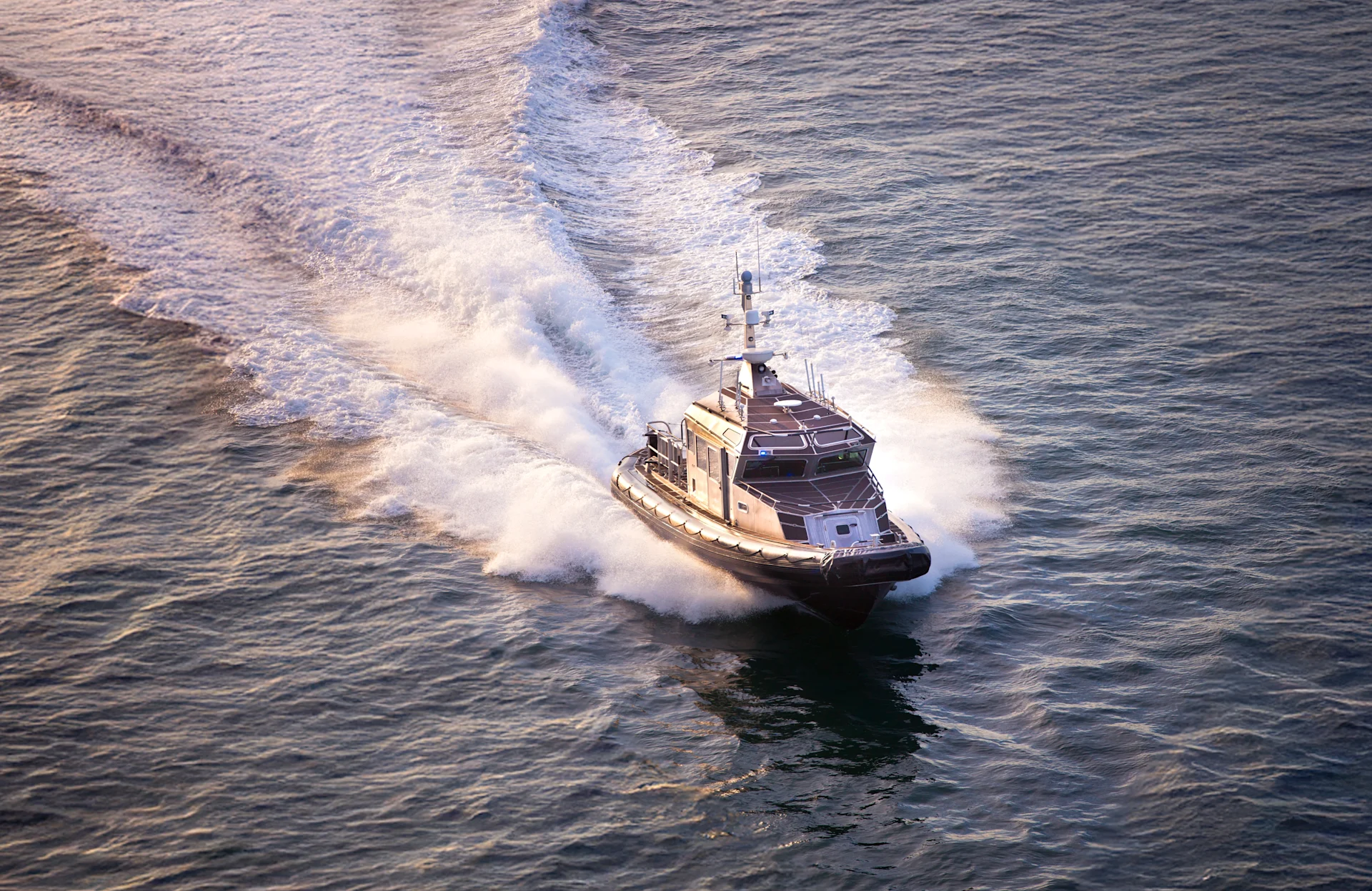
Traditional patrol vessels and aircraft remain useful but are costly and have limited coverage. They are most effective when integrated with modern surveillance systems. For example, commercial satellite imagery and automatic identification system (AIS) data can deliver near real-time tracking of vessels, although their reach is limited by high costs, data-processing demands and weather conditions that obscure sensors.
Recent advances in uncrewed surface vehicles (USV) offer new possibilities. These low-carbon platforms, powered by solar and wind, can patrol for months, carrying radar, AIS receivers, cameras and acoustic sensors to provide constant coverage. Beyond detection, their presence deters intrusions while collecting vital scientific data to measure the success of protection efforts and identify potential threats.
Shore-based radar adds another layer. Placed strategically, it can track vessels around the clock, giving early warning of intrusions and prompting further checks. Its reach, however, is shaped by weather and atmospheric conditions.
Perhaps the most overlooked resource in MPA monitoring is the local community. Residents, fishers and recreational boaters know local waters best. With trust and simple reporting channels, they can act as “eyes on the water”. When locals feel they have ownership of an MPA, compliance improves, and monitoring gains a valuable human layer.
Beyond conservation, monitoring can deliver significant economic benefits. A command centre to process data from satellites, USV, radar and communities creates jobs for operators, analysts and technicians. USV operations alone create jobs in launch, recovery, maintenance and sensor calibration.
This demand can stimulate local universities and training institutes to build capacity in ocean-monitoring technologies, creating opportunities for both students and instructors. In this way, MPA monitoring becomes part of the blue economy, supporting conservation while fostering workforce development.
Designing an effective monitoring programme is difficult. The ocean is vast, budgets are tight and technology is imperfect. But a layered approach—combining traditional patrols, satellite imagery, uncrewed vehicles, radar and human vigilance—can work.
Done well, monitoring protects ecosystems, strengthens local economies and helps MPAs keep their promise: to preserve the ocean’s biodiversity and cultural heritage for generations to come.